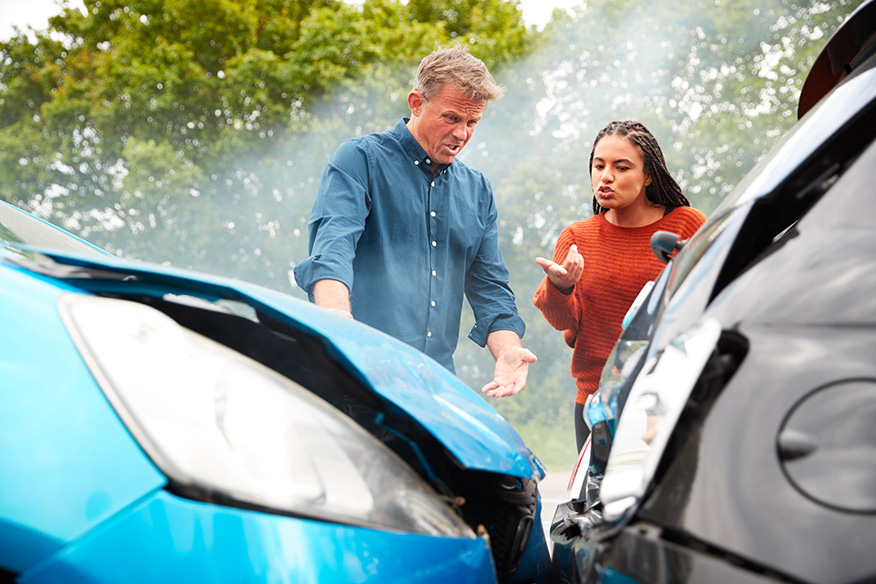
Fender Benders: How Liability Is Determined
When two vehicles are involved in a minor collision, figuring out who’s at fault isn’t always straightforward. And contrary to what many people think, liability isn’t always assigned to just one person.
In Québec, this is governed by clear rules designed to simplify and speed up the claims process.
The Direct Compensation Agreement
Liability in a collision is determined under the Direct Compensation Agreement (DCA). This framework assigns different levels of fault, typically expressed as percentages: 0%, 50% or 100%. These percentages determine who is liable, to what extent, and, most importantly, how damages will be compensated.
Compensation based on your level of liability
If you are found to be 0% at fault, it means you did nothing wrong. Your insurer will cover the damage to your vehicle with no deductible, provided that this coverage is included in your policy. Even if the other driver is at fault, you deal exclusively with your own insurer.
At the other end of the spectrum, if you are 100% at fault, your insurer will assess your vehicle to determine whether it can be repaired or must be declared a total loss. Compensation will depend on the coverage in your policy, and a deductible will apply.
There are also situations where liability is shared, for example 50/50. In these cases, the deductible may apply in part or in full, depending on the circumstances and the terms of your policy.
How is liability determined?
To establish the percentage of fault, insurers rely on several factors: Québec’s Highway Safety Code, the circumstances of the accident, the rules set out in the DCA, and the information recorded in the joint accident report completed after the incident.
The Direct Compensation Agreement makes the claims process faster and more straightforward, since each insured person is compensated directly by their own insurer.
Understanding these rules can help you know what to expect after a collision and make more informed decisions about your auto insurance.